Search Credit Card Offers
$1,000 Cash Back: Fund Your Next Major Business Project with Strategic Credit Card Spending
Many business owners face the challenge of significant upfront expenses when launching a new initiative, investing in growth, or simply navigating periods of high operational outlay. Whether it's a substantial marketing campaign, a critical software upgrade, or a bulk inventory purchase, these costs can strain cash flow and impact the bottom line. However, a strategic approach to business credit card usage can turn these necessary expenditures into an opportunity for a significant cash injection. The Capital One Spark Cash offers a compelling welcome bonus that, when timed correctly with your business's spending patterns, can effectively provide a substantial rebate on your initial investment.
Turning Initial Business Spending into a $1,000 Return
The cornerstone of this strategy is the welcome bonus: earn a $1,000 cash bonus when you spend $10,000 within 3 months of account opening. For a business, this isn't just a perk; it's a tangible financial benefit. Think of it as an immediate 10% return on your first $10,000 in qualifying business expenses. This isn't theoretical future value or points to redeem for something specific; it's cold, hard cash back into your business.
This bonus structure is particularly powerful because it's not tied to specific spending categories, nor does it require a complex points redemption strategy. You simply meet the spending threshold on your regular business purchases within the introductory period, and the $1,000 cash bonus is yours. This direct cash benefit can be used for anything: reinvesting into the business, covering operating costs, or even reducing the overall expense of the large project that helped you earn it. Unlike travel points or category-specific rewards, which might limit flexibility, a cash bonus provides immediate liquidity. This allows businesses to fund unexpected repairs, invest in employee training, or make a small but critical capital investment that wasn't initially budgeted for.
Who This Welcome Bonus is Best Suited For
This specific feature is ideal for business owners who:
- Have Predictable, Large Upcoming Expenses: Businesses anticipating a major software implementation, a large inventory order for a peak season, a comprehensive digital marketing push, or a significant office renovation within a 3-month window are perfectly positioned. This includes a retail business purchasing inventory for the holiday season, a construction company buying materials for a new project, or a consulting firm investing in new client management software licenses.
- Are Launching a New Venture: Startups often incur considerable initial costs for equipment, software licenses, legal fees, and early marketing efforts. Shifting these essential startup expenses to a new card can provide a valuable financial boost. This covers everything from domain registration and web hosting to office furniture and initial product development costs.
- Need to Offset Upfront Project Costs: Any business embarking on a project with a substantial upfront financial commitment can use this bonus to effectively reduce the net cost of that project. For example, a restaurant upgrading its kitchen equipment or a service business rebranding with new signage and promotional materials.
- Value Direct Cash Back: Businesses that prefer straightforward cash back over travel points or complicated rewards programs will find this bonus highly appealing due to its immediate and flexible nature. The simplicity of cash back means less administrative overhead for tracking and redeeming.
- Are Focused on Maximizing Cash Flow: For businesses that prioritize maintaining healthy cash reserves, receiving a $1,000 bonus directly back into their operations can be a significant boost, freeing up capital for other uses or as a buffer against unforeseen circumstances.
It's crucial that the $10,000 spend is genuinely part of your business's planned expenditures, not spending manufactured solely to chase the bonus. The most effective use of this feature involves aligning it with existing or inevitable business needs.
Real-World Scenario: Powering a Marketing Blitz
Let's consider Sarah, the owner of "Artisan Bites," an online gourmet food delivery service. Sarah has ambitious growth plans for the upcoming quarter, centered around a major digital marketing campaign designed to expand her customer base and launch a new line of seasonal products. She's budgeted $12,000 for ad spend across various platforms (Facebook, Instagram, Google Ads), graphic design services, and influencer collaborations over the next three months.
The Challenge: Funding a significant marketing push while maintaining healthy cash flow. Sarah knows this investment is critical for growth, but she'd prefer to minimize the immediate strain on her operating capital.
The Solution with the Capital One Spark Cash:
- Strategic Timing: Sarah applies for the Capital One Spark Cash just before initiating her marketing campaign. This aligns the card's 3-month spending window with her heaviest anticipated expenditures.
- Consolidating Spend: She directs all her marketing-related expenses - ad platform charges, agency fees, payments to designers and influencers - to her new Spark Cash card. These are all legitimate business expenses that she would incur regardless. Her ad spend alone on Google Ads and Facebook frequently exceeds $3,000 per month, making the $10,000 threshold easily achievable.
- Meeting the Threshold: Within the first six weeks, her combined marketing spend easily surpasses the $10,000 requirement. This includes direct ad buys, a $2,500 payment to a graphic design agency for new product visuals, and $1,500 in payments to various food influencers.
- Earning the Bonus: Shortly after meeting the spending threshold (and within the 3-month window), the $1,000 cash bonus is added to her rewards balance.
The Impact for Sarah:
- Direct Cost Reduction: The $1,000 bonus effectively reduces the net cost of her $12,000 marketing campaign to $11,000. This is a substantial saving on a crucial business investment. This reduction means her campaign now effectively costs 8.3% less than budgeted.
- Boosted Cash Flow: Instead of tying up an extra $1,000 in the campaign, that money is now available for other operational needs, such as purchasing ingredients for her new product line or investing in improved packaging. She can allocate this freed-up capital to a new analytics tool to better track campaign performance, or use it to offer a more aggressive introductory discount for her new seasonal products.
- Enhanced ROI: The campaign now boasts an even better return on investment, thanks to the bonus effectively subsidizing a portion of the expenditure. If her campaign generates $50,000 in new revenue, the net profit margin is improved by the $1,000 bonus.
Pro-Tip for Timing: To maximize the bonus, plan to apply for the card immediately before you anticipate a period of high business spending. This ensures you have the full three months to meet the $10,000 threshold using your natural business operations. Don't apply too early if your major expenses are months away, as the 3-month clock starts ticking from account opening. Consider reviewing your last year's spending to identify seasonal peaks or planned large investments.
Another example involves Mark, who owns a small manufacturing business specializing in custom furniture. He needs to purchase a new CNC machine, costing $25,000, to increase production efficiency and expand his product line. He plans to make a $15,000 down payment on the machine within the next two months. By applying for the Capital One Spark Cash and putting the $15,000 down payment on the card, he easily meets the $10,000 spend requirement. The $1,000 cash bonus he receives effectively reduces the cost of his down payment to $14,000, freeing up capital for raw material purchases or additional tooling for the new machine. This direct reduction in a significant capital expenditure makes the investment more palatable and immediately improves his project's financial outlook.
Issuer: Capital One • Network: VisaSynced Daily Data Verified: Sep 18, 2026 | |
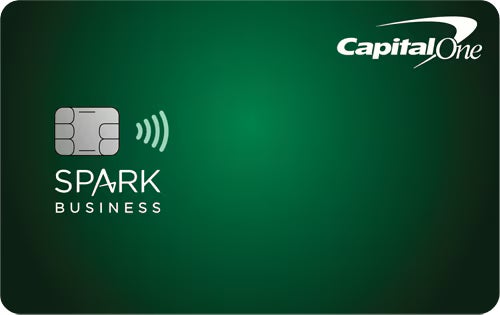 Capital One Spark Cash Annual Fee: $0 intro for first year; $95 after that |
|
Beyond the Bonus: Sustained Value for Business Spending
While the $1,000 welcome bonus is a significant draw, it's also important to consider the long-term value the card provides, which reinforces its utility beyond just the introductory period. After Sarah earns her bonus, all her subsequent business spending continues to earn unlimited 2% cash back. This means her remaining marketing budget, ongoing operational costs, and future investments will consistently contribute to her cash back earnings.
The "unlimited" aspect of the 2% cash back is crucial for businesses with fluctuating or high spending patterns. There's no cap on how much cash back you can earn, ensuring that every dollar spent contributes to your savings, regardless of your business's growth or specific spending needs. This consistent earning potential complements the initial bonus, making it a powerful tool for managing all business expenses. For example, if Sarah continues to spend $4,000 a month on various business expenses after the bonus period, she'll earn $80 in cash back every month, adding up to nearly $1,000 annually from the 2% alone (assuming $48,000 annual spend). This ongoing cash back can be used to build a small emergency fund, cover minor equipment repairs, or contribute to a rainy-day fund for slow periods.
Free employee cards also help consolidate all business spending and ensure every dollar spent by the team contributes to the 2% cash back and, potentially, the initial bonus spend requirement. These cards offer benefits such as simplified expense tracking, as all employee purchases appear on a single statement. Business owners can also set individual spending limits for each employee card, providing control and preventing unauthorized or excessive spending. This centralized spending also streamlines accounting processes, making it easier to categorize expenses and prepare for tax season.
Strategic Implementation and Workflow
Effectively leveraging this welcome bonus requires a clear plan.
- Assess Upcoming Expenses: Before applying, make a list of all significant business expenses you anticipate within the next 3-4 months. This includes advertising, inventory, software subscriptions, professional services, equipment purchases, office supplies, utilities, and travel. Review your financial projections, past spending data, and any outstanding vendor quotes to get an accurate picture of your upcoming financial obligations.
- Estimate Total Spend: Calculate if these planned expenses will comfortably meet or exceed the $10,000 threshold. It's better to aim for a buffer to account for any unexpected delays or changes in spending. Create a detailed budget for the next three months, itemizing each expense to ensure you have a clear path to the spending requirement.
- Apply Strategically: Submit your application for the card when your high-spend period is about to begin. The 3-month clock starts from account opening. Timing is key to maximize the utility of the bonus period.
- Consolidate Purchases: Once approved, make a conscious effort to route as many eligible business expenses as possible through your new Spark Cash card. This might involve updating payment methods for recurring bills (like internet or software subscriptions) or informing vendors of your new card for upcoming invoices (such as bulk inventory orders or marketing agency fees).
- Track Progress: Regularly monitor your spending through Capital One's online portal or mobile app. Stay aware of how much more you need to spend to reach the $10,000 mark. Set reminders in your calendar or integrate with your budgeting software to ensure you are on track.
- Utilize Employee Cards (If Applicable): If your business has employees who make purchases, issuing free employee cards can help accelerate reaching the spending threshold. All purchases made on employee cards also contribute to the bonus requirement and earn 2% cash back. Remember to set appropriate spending limits for each employee to maintain financial control.
- Pay Off Your Balance: To truly benefit from the $1,000 bonus, always pay off your credit card balance in full and on time. Carrying a balance and incurring interest charges will quickly negate the value of any cash back earned. This ensures the $1,000 bonus is pure profit for your business.
Important Consideration: While the goal is to meet the spending threshold, always prioritize legitimate business needs. Avoid making unnecessary purchases solely to hit the $10,000 mark, as the cost of those purchases will always outweigh the $1,000 bonus. The strategy relies on shifting existing or inevitable spend, not creating new debt.
Quantifying the Impact of the Bonus
Let's put the numbers into perspective. If your business spends exactly $10,000 within the first three months:
- Direct Bonus: You receive $1,000 cash.
- Ongoing Cash Back: On that $10,000, you also earn 2% cash back, which is an additional $200.
- Total Initial Value: This means for your first $10,000 in spending, you've effectively received $1,200 back. This represents an impressive 12% effective return on that initial expenditure.
Comparing this to a standard 2% cash back card without a bonus, it would take you $50,000 in spending ($50,000 x 0.02 = $1,000) to earn the same $1,000 bonus amount. If you were using a card that offered only 1% cash back, you would need to spend an astonishing $100,000 ($100,000 x 0.01 = $1,000) to achieve the same $1,000 return. By strategically using the welcome offer, you achieve that $1,000 with just $10,000 in spending, demonstrating the immense leverage of this introductory offer.
The card does have a $0 annual fee for the first year, then $95 after that. The $1,000 bonus far outweighs the first year's fee, providing a net gain even after accounting for the initial fee waiver. Even the ongoing $95 annual fee is easily covered by the consistent 2% cash back if your business has moderate spending. For instance, just $4,750 in annual spending ($4,750 x 0.02 = $95) is enough to offset the annual fee in subsequent years, making the 2% cash back truly profitable. This equates to spending approximately $396 per month on business expenses to cover the annual fee, a threshold many businesses easily meet. For a business spending $50,000 annually, the 2% cash back would yield $1,000, resulting in a net profit of $905 after the $95 annual fee. This illustrates how the card remains highly valuable beyond the initial bonus period.
Conclusion
For businesses facing significant, planned expenditures, the Capital One Spark Cash welcome bonus presents a compelling opportunity to inject substantial cash back into operations. By strategically timing your application with upcoming large purchases - be it a major marketing initiative, a crucial equipment upgrade, or a substantial inventory buy - you can turn necessary business spending into a $1,000 return. This not only helps offset initial project costs but also enhances cash flow and improves the overall return on your investments. Combined with the ongoing unlimited 2% cash back on all business purchases, the Capital One Spark Cash offers a powerful, flexible tool for smart business financial management, designed to reward spending where it matters most: your business's growth.