Search Credit Card Offers
Build Credit, Earn Cash Back: Your No-Fee Path to Financial Health
Understanding the No Annual Fee Advantage for Credit Builders
When you're working to establish or repair your credit, every dollar counts. An annual fee, even a small one, represents a guaranteed cost that you must pay regardless of how you use the card or how much you earn in rewards. For someone trying to be financially prudent and rebuild trust with lenders, these fees can feel like an unnecessary hurdle or a penalty for past financial missteps.
A card with a $0 annual fee eliminates this built-in expense, ensuring that the primary cost of owning the card is simply managing your spending and making on-time payments. This allows you to focus purely on the mechanics of responsible credit use: spending within your means, paying your balance in full, and building a positive payment history. The absence of an annual fee also means that if you decide to keep the card open long-term to benefit your "length of credit history" (a significant factor in your credit score), you won't incur ongoing charges for a card you might not even use frequently once your credit is established. This long-term, cost-free credit line can be valuable for your credit score's longevity.
The Power of 1.5% Cash Back on Everyday Purchases
While the no annual fee feature keeps your costs down, the unlimited 1.5% cash back on every purchase is where you start to see tangible value from your spending. Many secured cards offer limited or no rewards, making them purely tools for credit building. However, getting a consistent cash back rate for all your spending elevates the card beyond just a credit-building mechanism.
Consider your regular monthly expenses:
- Groceries: The weekly trip to the supermarket.
- Gas: Filling up your tank.
- Utilities: Your electricity, internet, or phone bills.
- Streaming Services: Netflix, Spotify, or other subscriptions.
- Dining: Casual meals or coffee.
Every one of these purchases, when made with your card and paid off, doesn't just contribute to your credit history; it also puts money back in your pocket. An unlimited 1.5% cash back means there are no rotating categories to track, no spending caps to worry about, and no specific merchants to prioritize. It's a simple, universal reward that applies to everything you buy, every day. Over time, these small percentages add up, effectively reducing the cost of your essential spending.
Tactical Tip: Automating Bill Payments: Set up your recurring utility bills, streaming services, and even gym memberships to be paid automatically with your card. This ensures regular, on-time payments that build your credit history, and each payment earns you 1.5% cash back without extra effort. Always pay your card balance in full and on time to avoid interest charges.
Issuer: Capital One • Network: MastercardSynced Daily Data Verified: Sep 18, 2026 | |
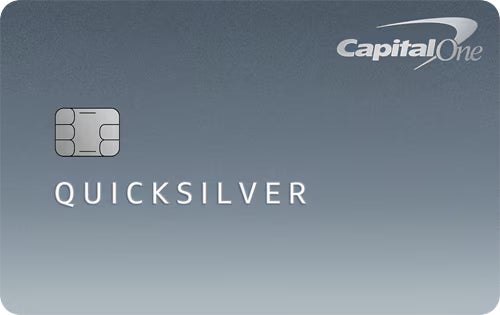 Capital One Quicksilver Secured Cash Rewards Credit Card No Annual Fee! |
|
A Real-World Scenario: Michael's Credit Journey
Let's look at Michael, a recent college graduate who has just landed his first full-time job. He's never had a credit card before, and his credit file is thin. He knows building credit is crucial for future goals like renting an apartment without a co-signer, getting better rates on car loans, or eventually buying a home. He's also keen to be financially responsible and not accrue debt or unnecessary fees.
Michael decides to apply for a card that requires a security deposit but offers clear benefits. He puts down a refundable $200 security deposit to get a $200 initial credit line. His goal is simple: use the card responsibly to build a solid credit foundation.
Here's how the features work for him:
- No Annual Fee: Michael doesn't have to worry about an extra charge eating into his budget. This means all his focus can be on managing his spending and payments, not on justifying an annual cost.
- Everyday Spending, Everyday Rewards: Michael commits to using his card for predictable, everyday expenses that he would pay for anyway, ensuring he never spends more than he can afford to pay back.
His planned monthly expenses with the card are:
- Groceries: $150 per month
- Gas: $80 per month
- Streaming Services/Subscriptions: $40 per month
- Internet Bill: $60 per month
- Dining Out (occasional): $70 per month
- Total Monthly Spending: $400
Michael carefully tracks his spending to stay within his budget and ensures his total monthly charges do not exceed what he can comfortably pay back. He plans to make multiple payments throughout the month if his spending approaches his $200 credit limit, or pay his balance in full before the statement closes to keep his reported utilization low.
- Cash Back Accumulation: At an unlimited 1.5% cash back rate, Michael earns $6.00 back each month. This is calculated as $400 (total monthly spending) * 0.015 (cash back rate) = $6.00. Over a year, that's $72 back ($6 * 12 months). This isn't just a bonus; it's a small but tangible reduction in his everyday expenses. He can redeem this cash back as a statement credit, effectively lowering his bill, or as a direct deposit into his bank account.
- Credit Building: Most importantly, by consistently using the card for these expenses and paying his entire balance in full and on time every month, Michael is rapidly building a positive payment history. This is the single most important factor in his credit score. He's also keeping his credit utilization low by paying off his balance before the statement closes or making multiple payments within the month if his spending exceeds the limit briefly. For example, if his credit limit is $200, and he spends $150, his utilization is 75%. If he pays $140 before the statement, his reported utilization is 5% ($10/$200), which is much better for his score.
- Path to a Higher Credit Line: After six months of diligent use and on-time payments, Michael is automatically considered for a higher credit line without needing to put down an additional deposit. This is a critical feature for secured card users. A higher credit line means his credit utilization ratio can naturally decrease even if his spending remains the same, further boosting his credit score. For instance, if his limit increases from $200 to $500, and he maintains a $10 reported balance, his utilization drops from 5% ($10/$200) to 2% ($10/$500), which is even more favorable. This increase also signifies that Capital One trusts his responsible behavior.
The Capital One Quicksilver Secured Cash Rewards Credit Card serves as Michael's foundational tool, helping him establish a strong financial footprint without unnecessary costs or complex reward structures.
Beyond the Initial Line: Growing Your Credit with Responsibility
The ability to be "automatically considered for a higher credit line in as little as 6 months with no additional deposit needed" is a crucial secondary feature for anyone using a secured card to build credit. Many secured cards leave you stuck at the initial credit limit until you either apply for an upgrade to an unsecured card or put down more money. This feature offers a clear, performance-based pathway to growth.
Here's why this matters significantly for credit building:
- Improved Credit Utilization: Your credit utilization ratio (how much credit you're using versus how much you have available) is a key factor in your credit score. If your credit line increases from $200 to, say, $500, and you continue to spend $400 per month but pay it off, your reported utilization looks much better. Even if you maintain a low balance, a higher limit makes it easier to keep your utilization under the recommended 30% mark. For instance, if you usually let $50 report on a $200 limit, your utilization is 25%. With a $500 limit, that same $50 reported balance becomes 10% utilization, which is a stronger indicator of responsible credit use to bureaus.
- Demonstrates Lender Trust: An automatic credit line increase is a strong signal that the issuer recognizes your responsible financial behavior. It's an affirmation that you're handling credit well, and it can pave the way for future unsecured card offers and better lending terms. This trust is built on a consistent history of on-time payments and managed spending.
- Bridge to Unsecured Credit: For many, the ultimate goal of a secured card is to eventually transition to an unsecured card. A card that actively helps you grow your credit line shows a clear progression, building your credit file for that next step. This consistent growth in your credit profile makes you a more attractive candidate for unsecured products with higher limits and more generous rewards.
Tactical Tip: Keep Utilization Low: To maximize the credit line increase benefit, aim to keep your reported credit utilization below 30% of your limit, ideally even lower (1-10%). This means if you have a $200 limit and spend $150, pay most of it off before the statement closes, leaving a small balance (e.g., $10-$20) to be reported. This strategy signals to credit bureaus that you can manage a high percentage of your available credit but choose not to use it all.
The Operational Workflow: Making It Work For You
Implementing a strategy to build credit effectively with this card involves a few key steps:
- Get Approved & Fund Your Deposit: The process is designed to be accessible. You'll put down a refundable security deposit, such as $200, which becomes your initial credit line. This deposit secures the card and mitigates risk for the issuer, allowing them to extend credit to those without a perfect history. Remember, this deposit isn't a fee; it's generally refundable when you close the account in good standing or upgrade to an unsecured card. The exact deposit amount determines your initial credit limit, so a larger deposit could provide a higher starting limit, though it's not required.
- Automate Small, Regular Payments: Identify 2-3 recurring bills that you can confidently pay off each month. This could be your streaming services, a small utility bill, or even a monthly grocery delivery. Setting these on autopay to the card ensures consistent activity and on-time payments without you having to remember each transaction. For instance, a $15 Netflix subscription, a $30 phone bill, and a $45 internet bill total $90 in automated spending, providing three separate payment entries to your credit report each month.
- Pay in Full, Every Month: This is arguably the most critical step. To build good credit and avoid costly interest charges, commit to paying your entire statement balance before the due date. This demonstrates financial discipline to credit bureaus and helps you avoid falling into debt. Interest rates on secured cards, while often high, become irrelevant if you consistently pay your balance in full, making the card a purely credit-building and rewards-earning tool. Setting up automatic payments for your statement balance from your bank account is a recommended practice.
- Monitor Your Spending and Rewards: Keep an eye on your cash back accumulation. Seeing your rewards grow provides positive reinforcement for your responsible spending habits. Also, use free tools like CreditWise from Capital One to monitor your credit score and see the positive impact of your actions. Regularly checking your credit score allows you to observe the direct correlation between your disciplined card use and your credit health improvement.
- Leverage Credit Line Increases: Once you're considered for and receive a higher credit line, continue your disciplined spending and payment habits. This increased limit gives your credit score another boost by improving your utilization ratio, even if your actual spending doesn't change. For example, if your limit increases from $200 to $500, a $100 monthly spend that you pay off would represent 50% utilization on the old limit but only 20% on the new, higher limit. This lower reported utilization is a strong positive for your credit score.
Warning: Avoid Overspending: While earning cash back is great, the primary goal of this card is credit building. Never spend more than you can comfortably afford to pay back in full each month. Using a credit card without a strict budget can quickly lead to debt, negating any benefits from cash back and potentially damaging your credit. Interest charges on a $400 balance at 26.99% APR, for example, would quickly erase the $6.00 cash back earned, turning a benefit into a financial burden.
Quantifying the Value: More Than Just Cash Back
Let's quickly quantify the direct monetary value. If Michael, in our scenario, maintains his $400/month spending, he's earning $72 in cash back annually. While this isn't a fortune, it's $72 that he wouldn't have received from many other secured cards, and it comes without any offsetting annual fees. This $72 can be used to offset a month's worth of streaming services or a significant portion of a grocery bill, providing tangible relief to his budget.
However, the true, long-term value extends far beyond this direct cash back. The primary benefit is the establishment of a strong credit score. A good credit score can unlock substantial financial savings over your lifetime. For example, consider the impact on interest rates:
- Mortgages: A difference of just 0.5% in interest rate on a $300,000 mortgage over 30 years can save tens of thousands of dollars. If a good credit score qualifies you for a 6.5% APR instead of 7.0% APR, the monthly payment on a $300,000 loan drops from approximately $1,996 to $1,896. This is a savings of $100 per month, or $1,200 annually, totaling $36,000 over the life of the loan.
- Car Loans: For a $25,000 car loan over 60 months, a credit score difference that yields a 5% APR instead of a 7% APR results in a lower monthly payment. At 7% APR, the payment is about $495; at 5% APR, it's about $472. This saves $23 per month, or $276 per year, amounting to $1,380 over the 5-year loan term.
- Personal Loans: A $10,000 personal loan over 3 years could have an APR of 18% for someone with fair credit versus 12% for someone with good credit. The monthly payment at 18% is roughly $361, while at 12% it's $332. This saves $29 per month, totaling $1,044 over the 3-year loan.
Beyond direct interest savings, a good credit score also facilitates:
- Easier Approval: For rental applications, utility services (often avoiding security deposits), and insurance policies (which can offer lower premiums to those with better credit histories).
- Access to Premium Credit Cards: With even higher rewards rates, valuable travel benefits, and more extensive perks down the line, once your credit is established. These cards can offer benefits far exceeding the 1.5% cash back, amplifying your rewards potential.
The $0 annual fee and 1.5% cash back combine to create a low-cost, high-value environment for credit building, making the path to financial health both attainable and rewarding. The initial $72 in cash back pales in comparison to the potential thousands of dollars saved from improved credit over time.
Who This Feature Combo Suits Best
This combination of no annual fee, unlimited 1.5% cash back, and consideration for a higher credit line is ideally suited for:
- First-time cardholders: Young adults, recent immigrants, or anyone who has never had a credit card and needs to build a credit file from scratch. The straightforward nature removes common complexities.
- Individuals actively rebuilding credit: Those who have experienced financial difficulties and are looking for a straightforward, cost-effective way to demonstrate responsible financial behavior. The absence of an annual fee ensures no additional financial burden during a recovery phase.
- Consumers who prefer simple, no-fuss rewards: If you don't want to track rotating bonus categories or intricate points systems, a flat 1.5% cash back on everything is incredibly appealing. It provides consistent value without requiring complex strategy.
- Budget-conscious individuals: Those who want to avoid any additional costs while working on their financial goals. The $0 annual fee directly supports this objective.
- Anyone seeking a clear path to an unsecured card: The automatic consideration for a higher credit line signals a structured progression towards potentially higher limits and eventual unsecured status. This provides a transparent roadmap for credit advancement.
In essence, if your goal is to responsibly build a strong credit foundation without incurring annual fees, while simultaneously getting a straightforward, consistent reward for your everyday spending, this card's core features offer a compelling solution.
Conclusion
Building a strong credit history is a fundamental step toward achieving financial stability and unlocking future opportunities. For many, the initial hurdle of finding a suitable card that offers value without hidden costs can be daunting. The combination of no annual or hidden fees, coupled with an unlimited 1.5% cash back on all purchases, presents a highly effective strategy for credit builders. It ensures that every dollar spent responsibly not only contributes to your credit score but also puts tangible cash back in your pocket. This approach, supported by the promise of automatic consideration for a higher credit line, transforms everyday spending into a proactive and rewarding credit-building exercise. The Capital One Quicksilver Secured Cash Rewards Credit Card provides a clear, practical, and cost-efficient pathway for individuals committed to strengthening their financial future.