Search Credit Card Offers
Stop Expensing: Reimburse Any Travel Cost with Miles for Freelancers & Small Businesses
Freelancers and small business owners navigate a unique financial landscape, often juggling client projects, administrative tasks, and the inevitable travel that comes with growth. The true operational headache isn't just the cost of a client visit or a conference; it's the convoluted, time-consuming process of expense reporting for every taxi fare, unexpected toll, or last-minute train ticket. Imagine bypassing the receipt-scanning, category-coding, and waiting for traditional reimbursement. The Capital One VentureOne Rewards Credit Card offers a direct solution, transforming diverse travel expenses into easily offset costs using miles, acting as your personal, flexible expense report eraser.
The Freelancer's Travel Conundrum: Beyond Airfare and Hotels
For many independent professionals and lean businesses, "travel" extends far beyond booked flights and hotel rooms. It's a dynamic mix of expenses that are often small, varied, and spontaneous, yet critical to business operations. Consider the graphic designer meeting a client in another city, the consultant flying to a project site, or the developer attending an industry workshop. Each of these professionals, regardless of their primary industry, will encounter travel needs that don't neatly fit into a corporate travel booking portal or a rigid expense policy. The very nature of freelancing demands agility, and that agility often translates into less predictable travel patterns and expenses.
These scenarios generate a host of "micro-travel" expenses that are a pain to track and reconcile. The challenge isn't just the monetary value, but the sheer volume and diversity of these small transactions, each requiring individual attention in a traditional expense system. This administrative burden can quickly detract from valuable billable hours.
- Local Transportation: Ride-shares to and from airports, train stations, or client offices; subway fares in new cities; bus tickets for short hops; taxi services for late-night work sessions when public transit isn't an option; even rented scooters or bikes for quick, efficient urban navigation. These are often paid for on the fly, with digital receipts that can be easily overlooked or lost in a sea of notifications.
- On-the-Go Logistics: Tolls on highways, parking garage fees (especially in metropolitan areas where parking can be exorbitant), bridge crossing fees, fuel for rental cars (even if the rental car itself is reimbursed elsewhere, the fuel often needs separate tracking), and even unexpected minor car repairs or tire changes if a personal vehicle is used for business travel.
- Unexpected Necessities: A last-minute hotel stay due to a delayed flight or an unforeseen project extension; a quick rental car to reach a remote client site not accessible by public transport; an impromptu workspace rental (like a co-working day pass) because a meeting ran longer than expected; or even specific local experiences (like a curated tour for a client that's legitimately travel-related, such as visiting a historical site relevant to a project's theme).
- Specialized Accommodations: Booking a unique Airbnb or boutique hotel directly because it offers specific amenities crucial for a project (e.g., a quiet workspace with specific lighting for a photographer, a particular photo setup, a kitchen for dietary needs, or simply a location that offers unique local insights vital for market research), rather than through a generic travel portal that might not list such niche options or offer the best rates for direct bookings.
Traditional expense reporting systems often struggle with the granular nature of these costs. They might require specific receipt formats, impose strict rules on *how* a travel expense must be booked to qualify for reimbursement (e.g., "only approved vendors"), or simply make the process of logging dozens of small items incredibly cumbersome. This forces freelancers to either absorb the cost out of pocket, spend valuable time on tedious administrative tasks that aren't billable, or opt for less ideal booking methods just to fit a policy, potentially compromising their work or efficiency.
The "Any Travel Purchase" Advantage: Your Personal Expense Report Eraser
This is where the flexibility of the Capital One VentureOne card truly shines. The core feature allows cardholders to "use your miles to get reimbursed for any travel purchase." This isn't limited to bookings made through Capital One Travel (though that option exists and earns 5X miles on hotels, vacation rentals, and rental cars, which can be beneficial for larger, planned bookings). This means you can pay for virtually *any* travel expense with your card, let it post to your account, and then redeem your accumulated miles for a statement credit to effectively erase that purchase. This freedom is a game-changer for independent professionals who value flexibility and direct control over their finances.
Capital One generally defines "travel purchases" broadly, encompassing a wide array of merchant categories to ensure most legitimate business travel expenses are covered. This broad definition is crucial because it accounts for the unpredictable and varied nature of freelance work. Unlike some cards that restrict redemptions to specific travel portals or only major airlines/hotels, VentureOne's approach is far more inclusive:
- Airlines (major and regional carriers)
- Hotels (chains, independent, boutiques)
- Motels
- Timeshares
- Car rental agencies (from major brands to local rental shops)
- Cruise lines
- Travel agencies (online and brick-and-mortar)
- Tourist attractions (e.g., museums, theme parks, guided tours, if legitimately travel-related to a project)
- Taxis (traditional cabs)
- Limousines
- Bus lines (intercity and local public transit)
- Passenger trains (commuter and long-distance)
- Toll bridges and highways
- Parking lots and garages
- Ride-sharing services (Uber, Lyft, etc.)
This expansive definition ensures that the varied, often irregular travel expenses of a freelancer or small business owner are almost always eligible. You gain the freedom to book where and how you need to, without worrying about specific rewards or reimbursement restrictions, and then simply offset the cost with miles you've already earned. This means less time spent cross-referencing policies and more time focused on client work.
Tactical Tip: This "purchase eraser" functionality is particularly powerful for unique lodging. If you need a specific Airbnb for a project, or a boutique hotel that's not listed on major Online Travel Agencies (OTAs) or requires a direct booking for a better rate, you can book it directly, pay with your card, and still use your miles to cover the expense. No need to compromise on your travel needs to fit a rewards program's portal requirements or a traditional expense policy. This extends to unique experiences as well; if a client requires an immersive cultural experience that involves purchasing tickets to a local event or a specialized tour, and it's classified as a travel-related merchant, your miles can cover it.
Issuer: Capital One • Network: MastercardSynced Daily Data Verified: Sep 18, 2026 | |
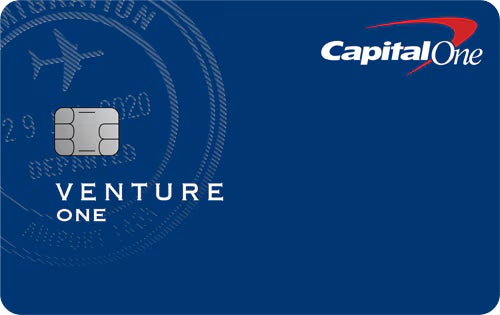 Capital One VentureOne Rewards Credit Card No Annual Fee! |
|
Workflow Walkthrough: From Swipe to Statement Credit
The operational workflow for leveraging this feature is remarkably straightforward, cutting down on administrative friction significantly. It's designed to be intuitive, allowing you to quickly manage your travel costs without disrupting your workflow.
- Make Your Travel Purchase: Use your Capital One VentureOne Rewards Credit Card for any eligible travel expense – a train ticket, a taxi, a specific hotel, a parking fee, a toll, or a ride-share. The key is to use the card for the transaction.
- Transaction Posts: Wait for the purchase to post to your account, which usually happens within 1-2 business days. This is a standard banking practice, ensuring the transaction is fully processed before it can be acted upon.
- Access Your Rewards: Log in to your Capital One online account via a web browser or use their highly-rated mobile app. Both platforms offer a seamless experience for managing your rewards.
- Initiate Redemption: Navigate to your rewards section. You'll typically find an option clearly labeled like "Cover Eligible Travel Purchases," "Redeem Travel Purchases," or "Purchase Eraser." This functionality is prominently displayed for ease of use.
- Select Purchase: A list of recent, eligible travel purchases will appear. This list is populated automatically by Capital One's system based on merchant category codes. Select the specific transaction(s) you wish to cover with miles. You can choose one or multiple items, depending on your available miles and preferences.
- Confirm & Redeem: Confirm the redemption. The corresponding number of miles (at a fixed value of 1 cent per mile) will be deducted from your balance, and a statement credit will be applied to your account. This credit typically appears within a few business days, directly reducing your outstanding balance.
This process eliminates the need to compile intricate expense reports, attach multiple receipts to a spreadsheet, wait for managerial or client approval (if you're self-reimbursing), and then wait again for funds to hit your bank account. The value offset is direct, almost immediate, and requires minimal administrative effort, allowing you to reclaim your time and focus on revenue-generating activities.
Beyond the Basics: Quantifying the Freelance Advantage
Let's simulate a common month for a freelance marketing consultant to illustrate the tangible benefits and savings, and then expand that to a full year to truly understand the impact on a small business's bottom line and cash flow.
Scenario: Monthly Freelance Travel Expenses for Sarah, a Marketing Consultant
Our consultant, Sarah, has a busy month with several client engagements, a professional development workshop, and a few unexpected travel needs. Her travel is fragmented and varied, typical of a lean operation.
| Expense Category | Item | Cost | Miles Needed (1 cent/mile) |
| Client Meetings | Ride-share to client A (round trip) | $60 | 6,000 |
| Parking at client B office | $15 | 1,500 | |
| Tolls for driving to client C | $10 | 1,000 | |
| Subway fares for client D meeting | $8 | 800 | |
| Workshop/Conference | Train ticket to workshop city (round trip) | $150 | 15,000 |
| Airbnb for workshop (2 nights, booked direct) | $280 | 28,000 | |
| Local transit pass (bus/subway) | $20 | 2,000 | |
| Unexpected/Logistics | Airport taxi after late flight | $40 | 4,000 |
| Rental car for remote client site (1 day) | $75 | 7,500 | |
| Fuel for rental car | $25 | 2,500 | |
| TOTAL MONTHLY | $683 | 68,300 miles |
In this single month, Sarah incurs $683 in diverse travel expenses. With the Capital One VentureOne card, she needs 68,300 miles to cover all these costs. If her travel patterns are similar throughout the year, her annual travel expenses would be approximately $683 * 12 = $8,196. This translates to 819,600 miles needed annually to cover all these costs through redemption.
Initial Bonus Impact: The Capital One VentureOne Rewards Credit Card offers a valuable sign-up bonus: 20,000 miles once you spend $500 on purchases within 3 months of account opening. This bonus alone is equal to $200 in travel. This immediate injection of miles would cover nearly 29.3% of Sarah's monthly example expenses ($200 / $683 = 0.2928), providing an immediate and significant offset right after account opening. This early boost is crucial for new businesses or freelancers just starting out, as it provides instant financial relief.
Ongoing Earn Rate: Beyond the bonus, Sarah earns unlimited 1.25X miles on every purchase, every day. This means general business spending – software subscriptions, domain renewals, office supplies, client lunches, professional networking events, marketing tools – constantly builds her mileage balance, creating a consistent fund for future travel reimbursements. Let's assume Sarah charges an average of $3,000 a month in general business expenses on her VentureOne card. In that month, she earns 3,000 * 1.25 = 3,750 miles. These 3,750 miles are worth $37.50 in travel reimbursement. Over a year, this amounts to 3,750 miles/month * 12 months = 45,000 miles, equating to $450 in travel reimbursement annually, solely from her regular business spending. This steadily contributes to her travel fund, making her travel costs feel less like an expense and more like a pre-funded operational cost.
Combined Impact: If Sarah's average monthly travel is $683, and her annual general business spending on the card generates $450 in travel reimbursement, she's already offsetting a significant portion of her ongoing travel. The flexibility to use these miles on *any* travel purchase means she's not locked into specific booking methods. This provides a constant, self-sustaining mechanism for managing travel costs without the administrative burden.
Strategic Insight: Combine this with the 0% intro APR on purchases for 15 months. For a small business, this is a powerful cash flow management tool. You can float larger travel expenses or project costs (e.g., a major conference trip, a client site visit requiring multiple flights and hotels), earn miles at 1.25X, and then effectively "reimburse" yourself with those miles, paying down the balance without incurring interest during the intro period. This significantly improves cash flow for small businesses, especially when waiting for client payments, which can often be 30, 60, or even 90 days out. Instead of your cash being tied up in travel expenses, it remains liquid, ready for other operational needs or investments.
The Cash Flow Lifeline: Reclaiming Your Working Capital
For freelancers and small businesses, cash flow is paramount – it's the lifeblood of the operation. Waiting for traditional reimbursement means your working capital is tied up, sometimes for weeks or even months, depending on client payment cycles or internal processing times. This can severely impact your ability to invest in new projects, pay vendors promptly, take advantage of early payment discounts, or even meet personal financial obligations if your business income is directly linked to your personal finances. A delay in reimbursement isn't just an inconvenience; it can be a significant operational hindrance.
By leveraging miles for direct statement credits, you bypass this delay entirely. The "reimbursement" is immediate in terms of value offset. The moment you redeem miles against a travel purchase, that amount is credited to your statement, reducing your outstanding balance or freeing up cash that would otherwise be used to pay off that expense. This is a critical operational advantage, ensuring your funds remain agile and available for the next business opportunity. For example, if you spend $500 on a last-minute flight for a new project, you can redeem 50,000 miles to cover that cost almost immediately. This means the $500 stays in your business bank account, ready to cover advertising, software licenses, or even personal living expenses, rather than being used to pay off a credit card bill that's waiting on a client's payment. This direct and swift financial cycle empowers small businesses to operate with greater confidence and less financial stress.
When Flexible Reimbursement Isn't the Best Fit (Tradeoffs)
While the direct travel reimbursement feature of the Capital One VentureOne is incredibly powerful for specific scenarios, it's essential for any savvy business owner to understand its limitations and when other strategies might be more beneficial. No single financial tool is perfect for every situation.
- High-Value Transfer Partners: The 1 cent per mile redemption rate for travel statement credits is a solid, consistent value, offering predictability and simplicity. However, some travel enthusiasts and advanced credit card users aim to maximize mile value by transferring them to airline or hotel loyalty programs. With strategic transfers to partners like Air Canada Aeroplan, British Airways Executive Club, or Wyndham Rewards, it's often possible to yield 2 cents per mile or more, especially for premium cabin international travel or high-end hotel stays. If your primary goal is aspirational travel via transfer partners and you have the time and expertise to navigate complex award charts, focusing exclusively on purchase erasure might mean leaving some potential value on the table. For everyday business travel, however, the simplicity of 1 cent per mile is often preferred over the complexity of maximizing transfer partner value.
- Large, Pre-Planned Bookings with 5X Earnings: For major flights, hotels, or rental cars that you *can* book through Capital One Travel, you'd earn an accelerated rate of 5X miles. For instance, a $1,000 hotel stay booked via the Capital One Travel portal would net you 5,000 miles (worth $50 in travel reimbursement). If you booked the same hotel directly, you'd only earn 1,250 miles (worth $12.50). While you could still redeem against those same purchases after they post (whether booked through the portal or direct), the initial 5X earning might encourage you to use the portal for those specific, larger bookings to accelerate your mile accumulation. The "any travel purchase" flexibility primarily adds value for purchases *outside* of the portal or for those smaller, harder-to-categorize expenses where portal booking isn't an option or doesn't offer a competitive rate.
- Strict Corporate Expense Policies: If you are an employee whose employer mandates booking through a specific corporate portal and offers swift cash reimbursement for all travel (e.g., within 3-5 business days), using personal miles for reimbursement might be less critical or even disallowed. In such cases, your employer's system is already providing the cash flow benefit. However, for those with hybrid roles, who manage their own business travel as part of a freelance gig, or whose employers have slow reimbursement processes, the flexibility and speed of VentureOne's mile redemption remain a strong draw. This card truly shines when you are your own "expense department."
Warning: While "any travel purchase" is broadly defined, Capital One retains the right to determine what qualifies. Always check their terms and conditions, or verify the merchant category code (MCC) if you're unsure about a specific, unusual expense. Merchant Category Codes are four-digit numbers used to classify businesses by the type of goods or services they provide. For instance, a ticket to a local museum might seem travel-related, but if its MCC is "entertainment" or "recreation" rather than "travel," it might not qualify for redemption. Similarly, a restaurant within a hotel might code as "dining" instead of "travel." Stick to expenses typically classified under standard travel MCCs (airlines, hotels, car rentals, tolls, taxis, public transport) for guaranteed eligibility. If you're ever in doubt about a specific merchant, a quick call to Capital One's customer service can clarify eligibility before you make a purchase you intend to cover with miles. This proactive approach ensures you maximize your rewards without any surprises.
The ability to directly offset diverse travel purchases with accumulated miles offers a distinct operational advantage for freelancers and small business owners. It simplifies expense management, liberates working capital, and significantly reduces the administrative burden associated with traditional reimbursement workflows. By leveraging the Capital One VentureOne Rewards Credit Card, you're not just earning miles; you're building a flexible travel budget, funded by your everyday business spending, ready to erase those varied travel costs as they arise. The freedom to pay for any travel expense and redeem miles for a statement credit transforms a common operational headache into a seamless financial advantage, allowing you to focus more on growing your business and less on tracking receipts.