On its own, the Chase Freedom Unlimited® is marketed as a cash back credit card where points are worth a flat 1 cent each. However, the true financial power of this card remains locked until you understand its underlying currency: Chase Ultimate Rewards (UR) points. By treating your earnings as flexible point assets rather than simple statement credits, you can significantly elevate your redemption margins.
To fully optimize this ecosystem, cardholders must look past basic cash redemption frameworks and master the mechanics of portfolio pooling. This technical manual details how the Ultimate Rewards engine operates, how to execute the "Chase Trifecta" configuration, and how to avoid the systematic devaluation traps built into consumer retail portals.
Issuer: Chase • Network: VisaSynced Daily Data Verified: Sep 18, 2026 | |
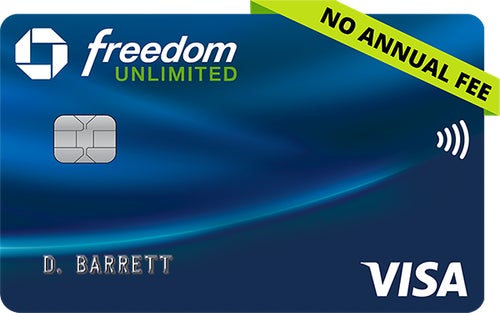 Chase Freedom Unlimited® No Annual Fee! |
|
1. The Core Point Conversion Mechanic
Every dollar earned on your card is tracked internally within your online account dashboard as an Ultimate Rewards point balance. When you earn "1.5% cash back" on a standard purchase, Chase is actually awarding you 1.5 UR points per dollar spent. When you hit a category multiplier like the 3% dining and delivery benefit, you are generating 3 UR points per dollar.
If you maintain the Freedom Unlimited as a standalone account, your point valuation is structurally locked to a 100 points = $1.00 conversion floor. While this offers reliable liquidity, it prevents you from beating market averages. To unlock true upside, you need to establish a bridge to Chase's premium travel network.
2. Executing the Chase Trifecta Architecture
The "Chase Trifecta" is an advanced optimization framework that combines multiple specialized Chase cards to maximize point generation across every major spending vertical, while consolidating all points into a single premium card balance that can access airline and hotel transfer partners.
A classic, high-yielding Trifecta portfolio generally consists of the following components:
- The Base Foundation (Chase Freedom Unlimited®): Deployed for all general, non-bonus spending to guarantee a minimum 1.5x point floor instead of standard 1x rates.
- The Rotating Accelerator (Chase Freedom Flex®): Deployed exclusively to capture 5x points on up to $1,500 in combined purchases in quarterly activated categories (e.g., gas stations, grocery stores, wholesale clubs).
- The Value Multiplier & Bridge (Chase Sapphire Preferred® or Sapphire Reserve®): Deployed for direct travel bookings and to serve as the master holding tank for your accumulated points.
The Point Consolidation Rule: Chase allows cardholders to instantly transfer points online between accounts belonging to the same individual or members of the same household. By shifting points from your Freedom Unlimited to a Sapphire Preferred card via the "Combine Points" interface, you instantly transition those points into a high-tier asset class.
3. Maximizing Multiplier Levers: Portal vs. Direct Transfer
Once your points are safely consolidated into a premium Sapphire account, you have two primary methods for outperforming the standard 1-cent cash baseline. Your choice depends directly on your travel preferences and optimization tolerance:
The Chase Travel Portal
Holding a Chase Sapphire Preferred® elevates your point value by a fixed 25% (making points worth 1.25 cents each) when purchasing flights, hotels, or car rentals directly through the Chase online travel portal. If you hold the Sapphire Reserve®, this bonus jumps to a fixed 50% multiplier (1.5 cents per point).
Direct 1:1 Partner Transfers
This is where the maximum value lies. Premium cards unlock the ability to transfer Ultimate Rewards points directly into high-value airline and hotel loyalty programs at a strict 1:1 ratio. Moving points directly to programs like Hyatt, United Airlines, or British Airways allows you to regularly book premium awards at values exceeding 2.0 to 3.0 cents per point.
To see how this works in practice, review our detailed transactional breakdowns inside the Ultimate Rewards Point Redemption Strategy Guide, where we map out real-world booking examples and highlight the common portal errors that trip up most beginners.
4. Devaluation Risks: The Amazon Checkout Trap
While maximizing value requires shifting points to premium partner networks, it is equally vital to understand where not to spend your hard-earned points. Merchant partnerships like the "Pay with Points" feature on Amazon or PayPal are designed as convenience features that systematically devalue your rewards balance.
When link integrations prompt you to use your Ultimate Rewards points at a retail checkout, the system generally values your points at a reduced rate of just 0.8 cents per point. This means you are giving up 20% of your baseline cash value and walking away from massive travel multipliers just for a moment of convenience. Always pay for retail orders using standard card transactions—protecting your purchase via built-in 120-day purchase protections—and save your point assets for high-yield redemptions.
Related Chase Freedom Unlimited® Reads:
- Comprehensive Hub Overview
- Best Ways to Redeem Cash Back
- Ultimate Rewards Point Redemption Strategy
- 200 Bonus Rules & Eligibility
- Drugstore Spend Optimization (MCC 5912)
- Dining Rewards & Qualification Rules
- Complimentary DashPass Activation Guide
- 0% Intro APR & Balance Transfer Guide
- Pay Over Time Feature Explained
- Pay Over Time on Amazon Purchases
- Chase Credit Journey Free Monitoring Review
- Credit Journey Access for Non-Customers
- Extended Warranty Protection Guide
- Purchase Protection Against Theft & Damage
- Auto Rental Collision Damage Waiver (CDW)
- Car Rental Insurance Explained
- Trip Cancellation & Interruption Insurance
- Travel Emergency Assistance Services